Bed bug heat and chemical remediation pairs lethal thermal saturation with precise liquid chemical applications to counter the specific biology of bed bugs. Thermal equipment elevates ambient room temperatures to…
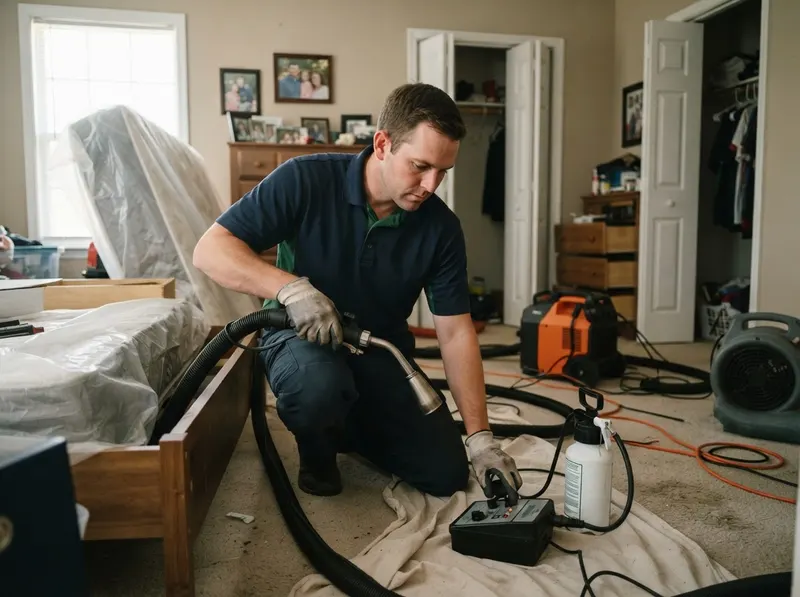
Bed bug heat and chemical remediation pairs lethal thermal saturation with precise liquid chemical applications to counter the specific biology of bed bugs. Thermal equipment elevates ambient room temperatures to between 122°F and 135°F using industrial forced-air heaters. This heat penetrates deep into mattress seams, structural baseboards, and hardwood floor cavities where standard contact sprays fail to reach. Sustained high heat coagulates the cellular proteins inside adult insects, nymphs, and eggs within 90 minutes of direct contact. To establish persistent defense, technicians apply non-repellent liquid residuals and desiccant dusts behind switch plates and inside wall perimeters. This secondary barrier eliminates stray nymphs that attempt to escape heated zones into adjoining rooms, avoiding the incomplete eradications common with over-the-counter canister foggers.
Selecting between thermal remediation and standalone chemical applications depends on structural containment and clutter density. Whole-structure thermal treatment provides single-day eradication of all life stages without requiring disposal of expensive mattresses or dressers. The operational trade-off centers on preparation intensity: homeowners must remove heat-sensitive items including wax candles, aerosol cans, vinyl records, and oil paintings prior to heater ignition. For properties where structural layout or utility limits restrict thermal equipment, multi-round chemical remediation using targeted insect growth regulators serves as the alternative. This approach demands 2 to 3 separate applications spaced 14 days apart to break the egg-hatching lifecycle, trading the single-day convenience of thermal treatment for lower equipment setup demands.
Remediation protocols account for the diverse residential architecture across Jefferson County. Historic homes in Highland Park, Forest Park, and Norwood feature plaster walls, heart-pine flooring, and settled framing that create extensive sub-surface voids where colonies harbor deep behind trim. In these environments, chemical dusting inside floorboard seams ensures pests do not bypass heat pockets. Dense multi-family residences and urban duplexes throughout Five Points South, Avondale, and Smithfield require simultaneous barrier treatments along shared party walls to prevent insect migration into neighboring units. Properties situated near Roebuck Springs, Huffman, and Crestline encounter varied construction layouts, from split-level ranch homes to concrete-slab foundations, each requiring calibrated heat circulation to prevent thermal loss near exterior masonry.
Every job gets a firm, written price after a free on-site visit.
Tell us about your bed bug heat & chemical remediation job in Birmingham and we'll send a clear, written quote, usually the same day.
 BugBouncer Pest Control